Basketful
UX (USER EXPERIENCE) PROJECT RMIT ONLINE 2025
Discover
The Project
Basketful is an online grocer that wants to provide a better experience for it’s customers by offering personalised recommendations, recipe suggestions and a smooth ordering process.
The Problem to Solve
Users find online grocery shopping and meal planning time-consuming and fragmented, with too many steps, generic product suggestions, and limited support for managing preferences, dietary needs, or delivery logistics. There is a need for a more efficient, personalized, and user-friendly experience that simplifies the process from planning to purchase.
Research goals
Identify the current market and understand user behaviours, preferences, expectations
and pain points, with the aim of guiding the development of a better online
Basketful experience.
Desk Research
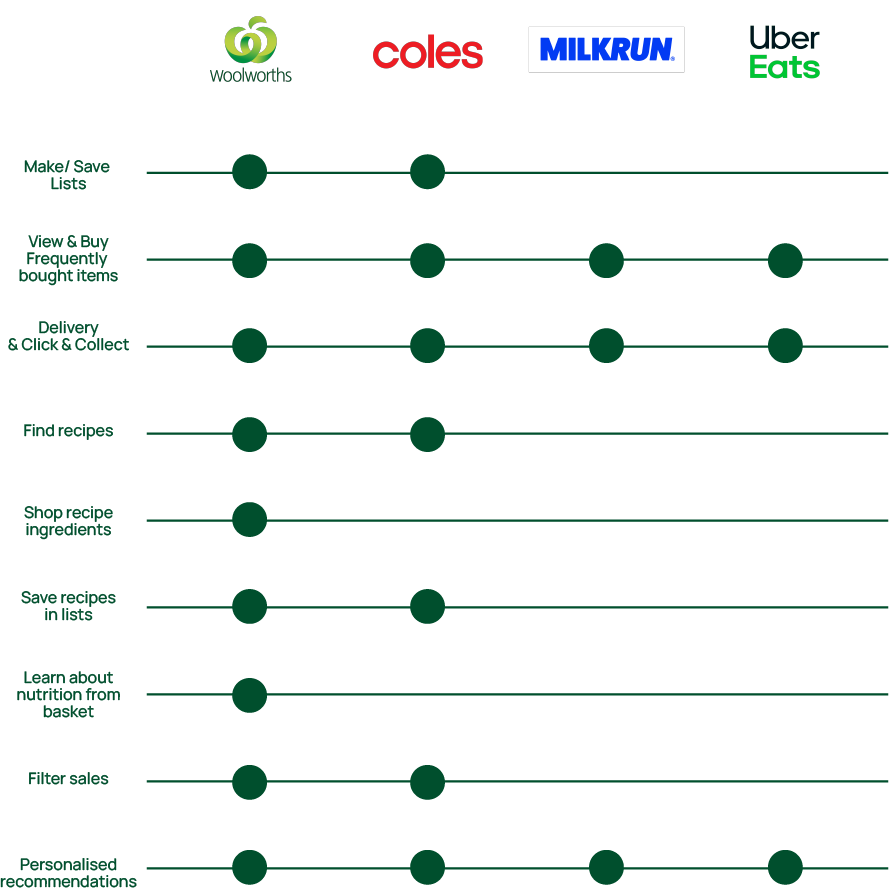
I conducted desk research to gain a broader understanding of existing solutions and industry standards within the online grocery shopping space. This research helped identify common patterns, features, and usability best practices across competitors and related platforms.
Research Undertaken:
Comparative analysis
User feedback analysis
Social listening
As I explored and compared different experiences, it sparked early ideas around features and pain points we could address to streamline and improve the overall shopping journey.
Key findings & outcomes
Recipe suggestions are generic and not tailored to users shopping behaviours, users still end up searching
Recipe suggestion sections take longer to find on most of the current apps
Some apps don’t have recipe to cart integration
Poor smart-re ordering processes or predictive suggestions
Feels very ‘chore’ like
User Interviews are an in-depth insight into who your users are, their lives, experiences, and challenges.


Identify why a user would use an online grocery shopping experience? What do they consider convenient? And which features or flows contribute to that perception?
User Interview Objectives
Identify pain points in the current ordering process. Do users get confused, frustrated or slowed down when placing an order?
Examine users’ grocery planning behaviours and habits. Uncover how a user plans meals, makes lists, and
how they choose what recipes to use each week.
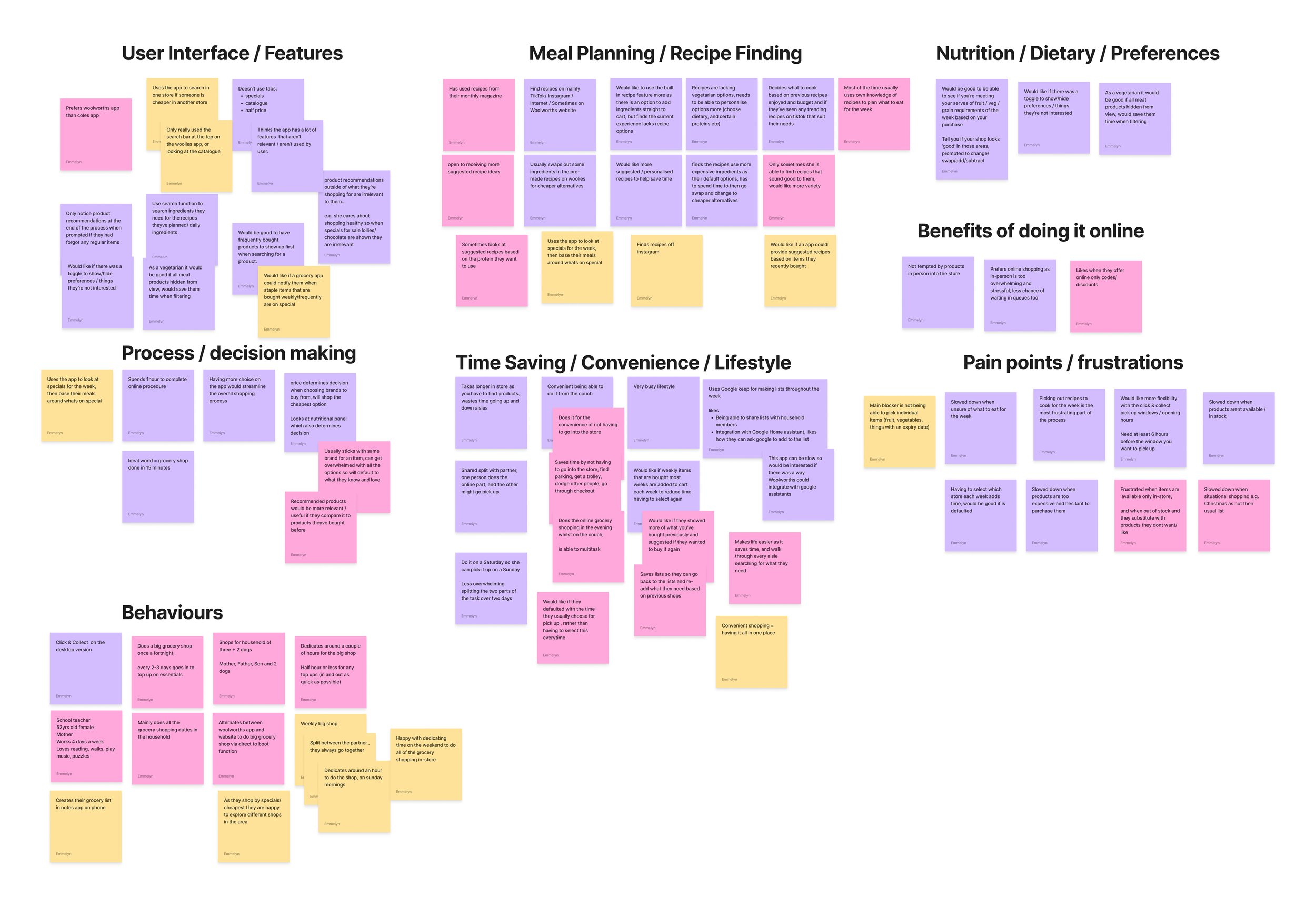
User interview outcomes & findings
What motivates a user to use an online experience to do their grocery shopping, recipe finding and meal planning?
Synthesising Findings
Users want integrated, personalised meal planning
Users currently seek recipe inspiration from visual platforms such as instagram & tiktok, and are open to using in-app suggestions if it is tailored and has relevance to them.
2. Online shopping is valued for it’s convenience and flexibility
Users want to be able to shop from anywhere and multitask. Users are open to new time saving solutions if they reduce the ‘chore’ like feeling of grocery shopping
3. Users want the app to understand and adapt to habits and preferences
Users want smarter personalisation and behaviour based features
4. Frustrations from decision fatigue, trust issues & limited product availability Some users dread the ‘chore’ of grocery shopping as there are too many options shown to them and are frustrated when items are unavailable online.
Discover
>
Define
Following the discover phase, I analysed and synthesised my research insights to identify and define the key problem to solve.
I began to ask…
How might we create a seamless experience so users are spending less time and reduce time spent on repeated weekly processes.
How might we increase attention to recipes and ensure the user feels confident in the recipes chosen?
How might we ensure a user feels confident they are shopping aligned to their dietary and health goals.
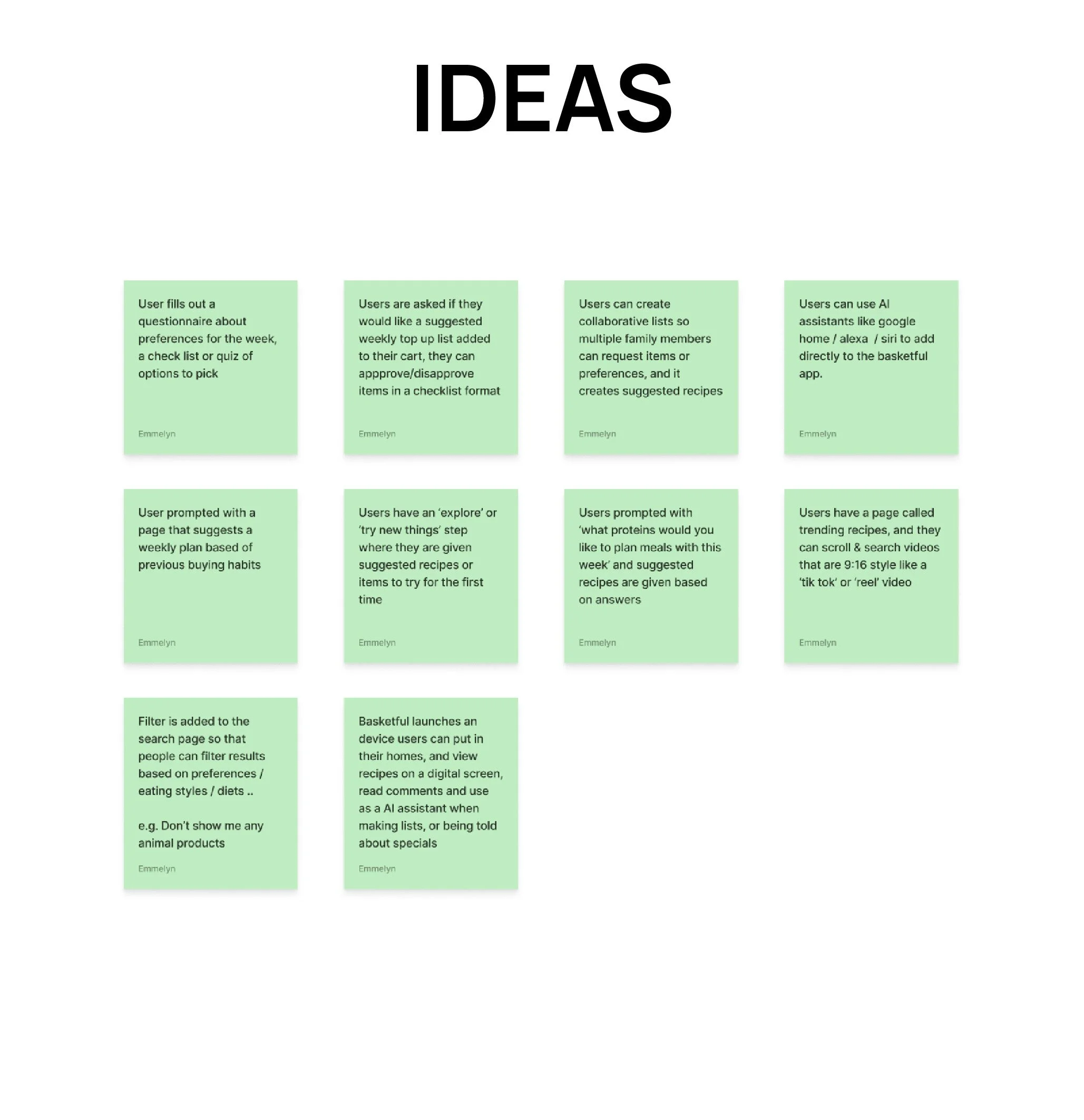
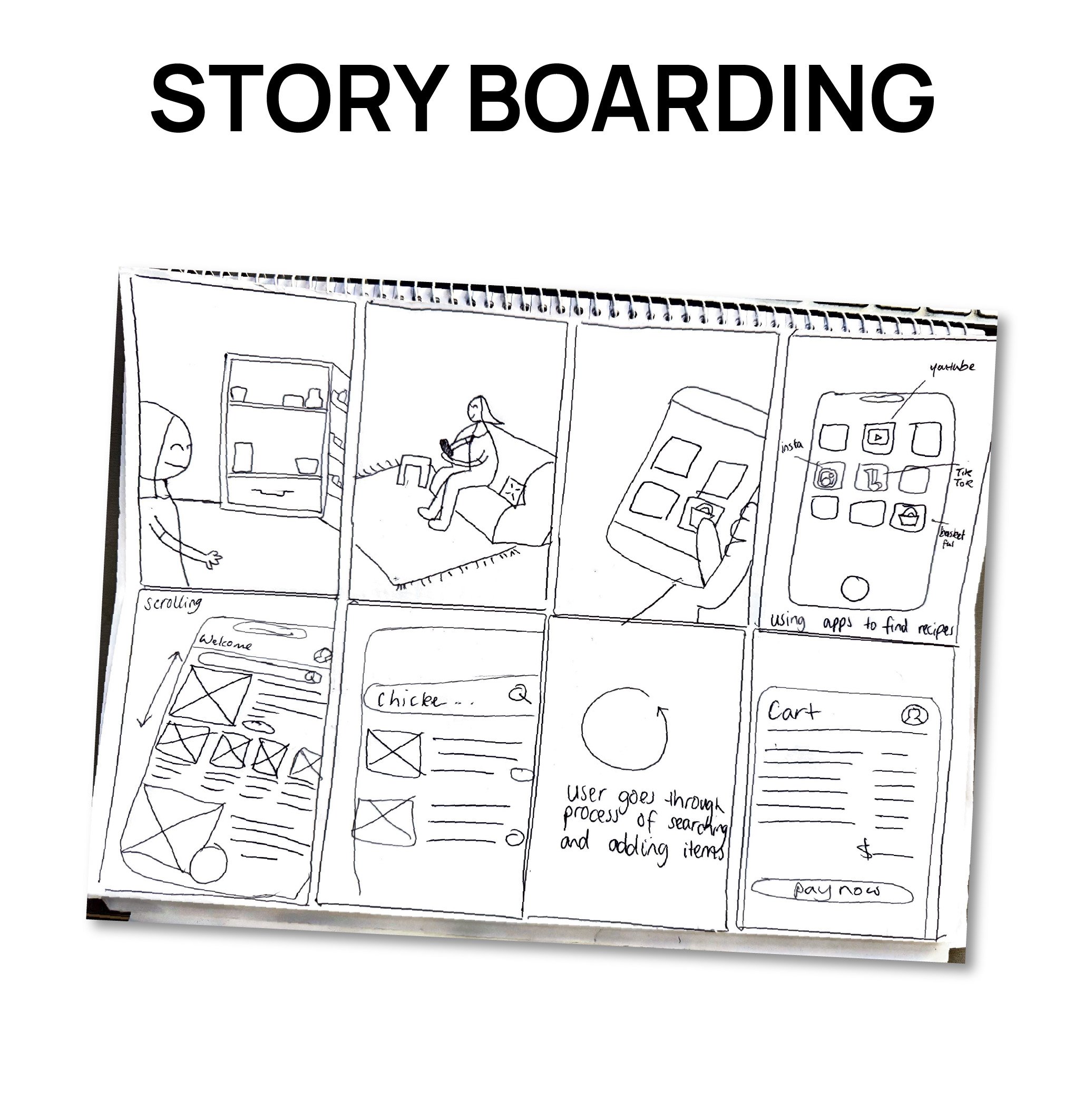
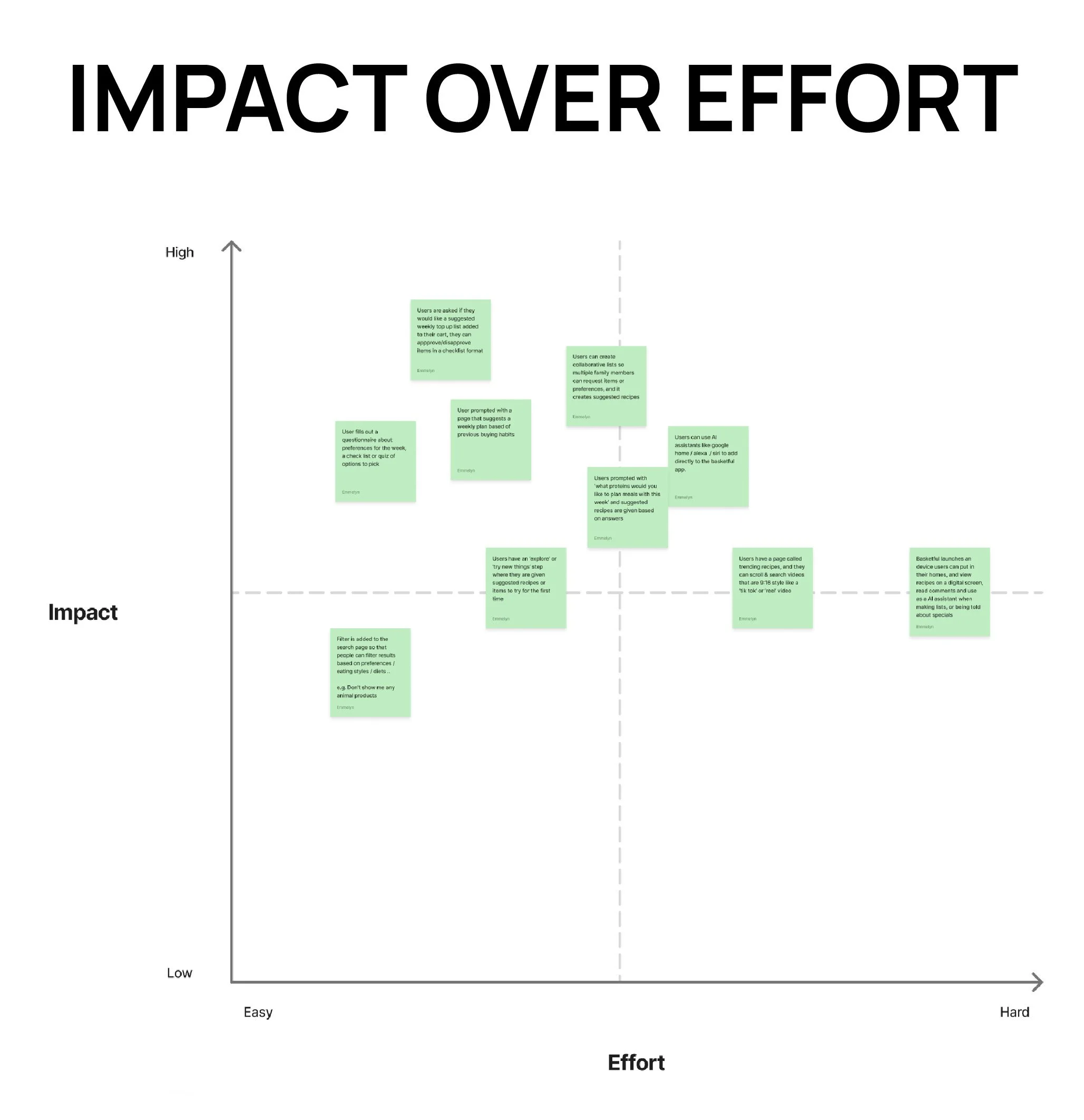
The Solution
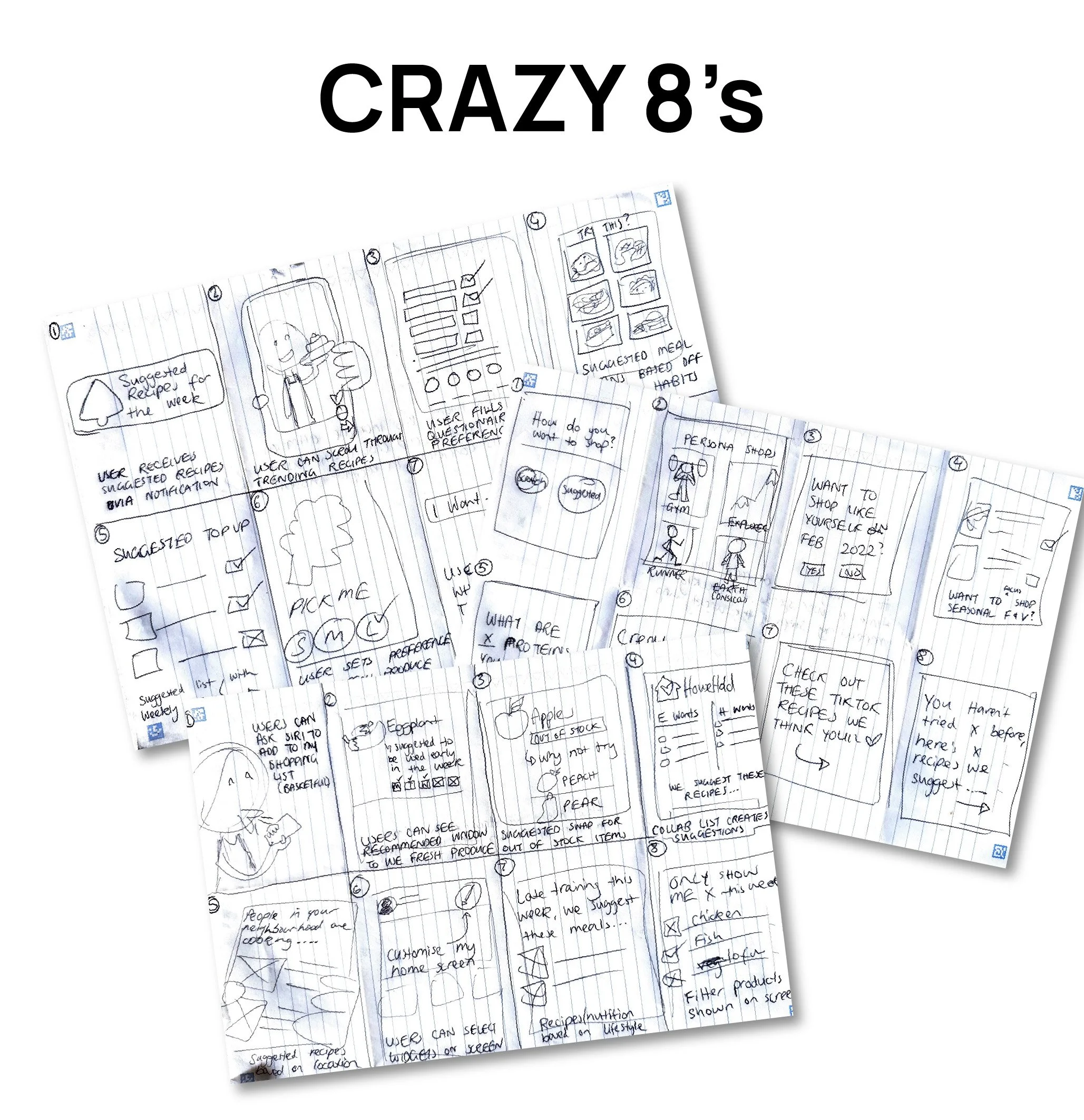
After doing prioritisation with the ideas, we were able to decide on the ideas that were going to have the highest impact with the minimal effort.
This idea looks at introducing a feature to the shopping experience that prompts users to fill out preferences for their upcoming shop, and the app will generate suggested recipes based on their information, past habits and dietary needs.
This will help streamline the process, saving time and reducing decision fatigue faced by users.
Ideate
>
Develop
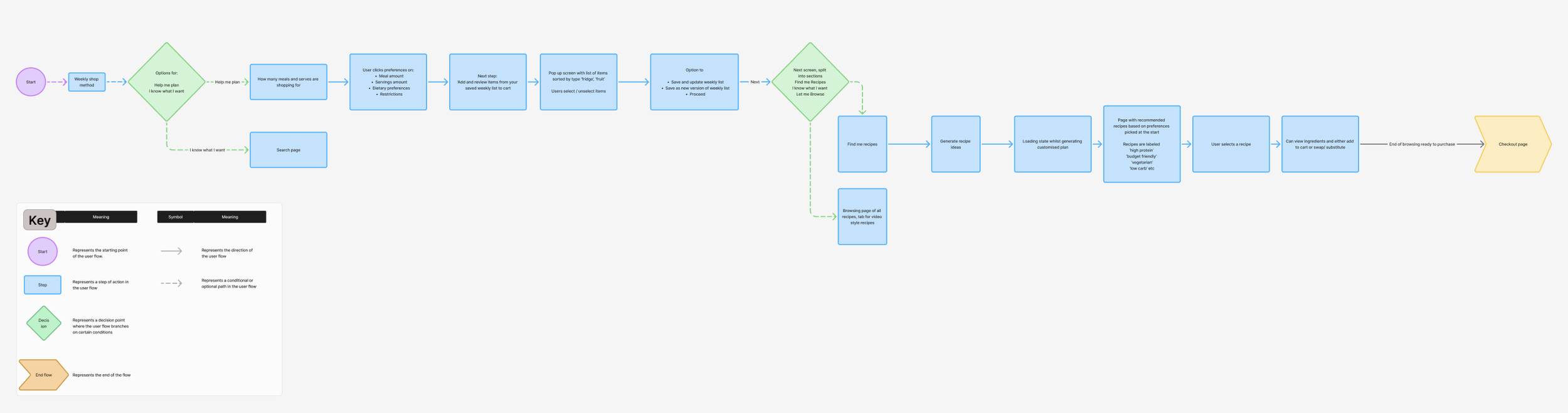
User Flow
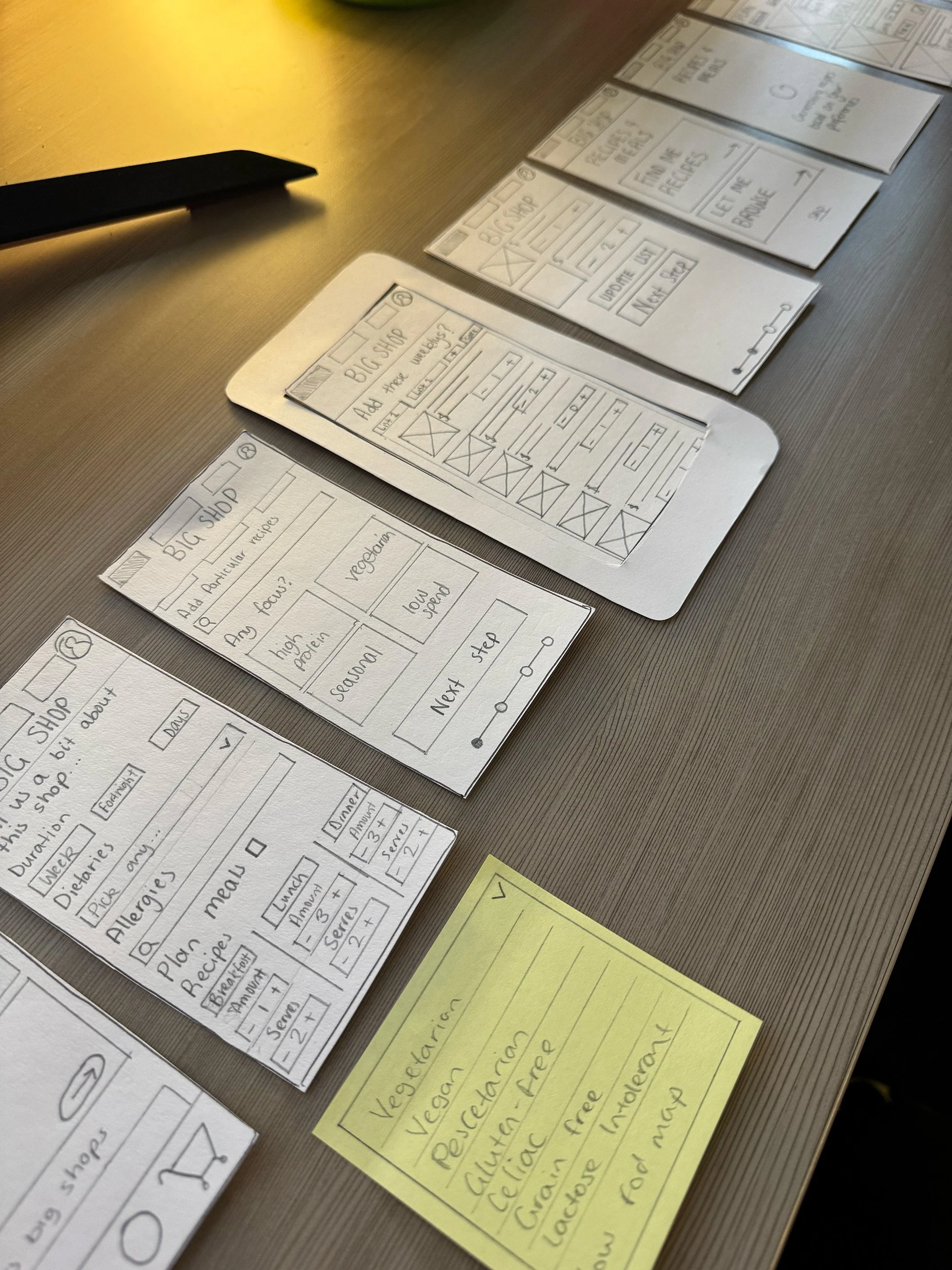
Paper Prototype
I sketched out the solution user flow in a low-fi paper prototype and started to visualise how this process would look on screens. Keeping in mind that this prototype will be used for usability testing in the next step.
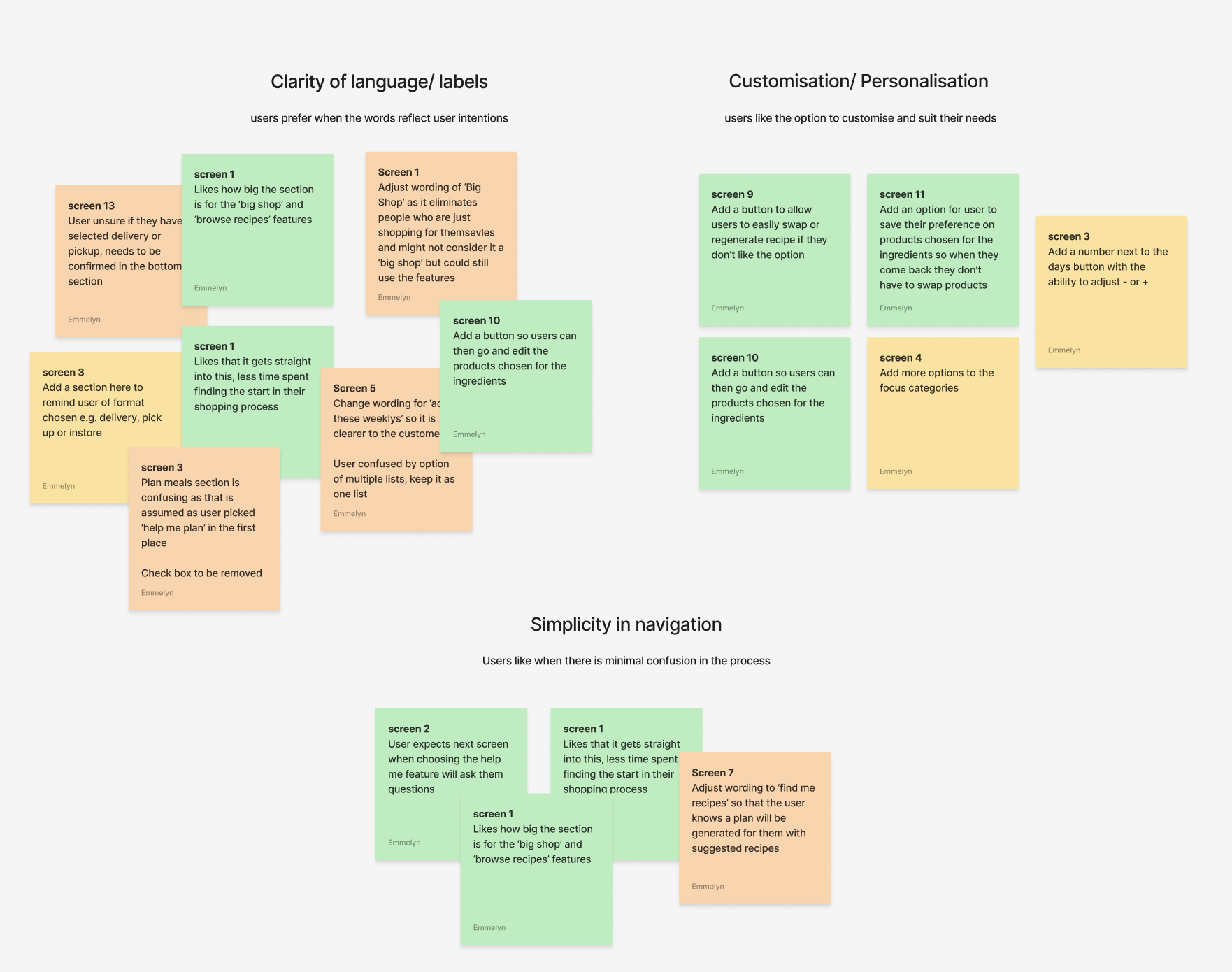
I conducted moderated usability testing on the paper prototype to determine which areas in the design needed to be refined, this helped me work out if anything in the process needed to be taken out or added.
Digital Synthesis
After doing digital synthesis with affinity mapping I was able to identify themes based on the insights I got from my users.
From these insights I have ideas on how to further refine the process so that the themes of clarity in language, customisation and simplicity are further strengthened in the user experience.
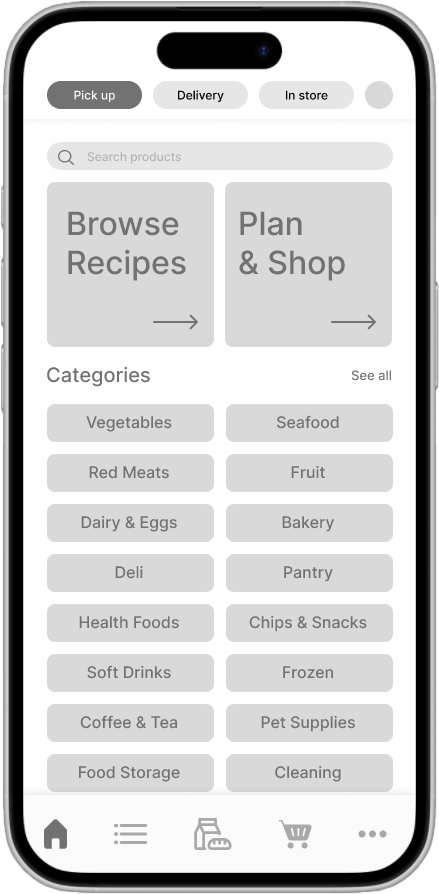
Medium Fidelity Clickable Prototype
The final step in my process was to deliver a medium fidelity clickable prototype to be handed over to the UI team.